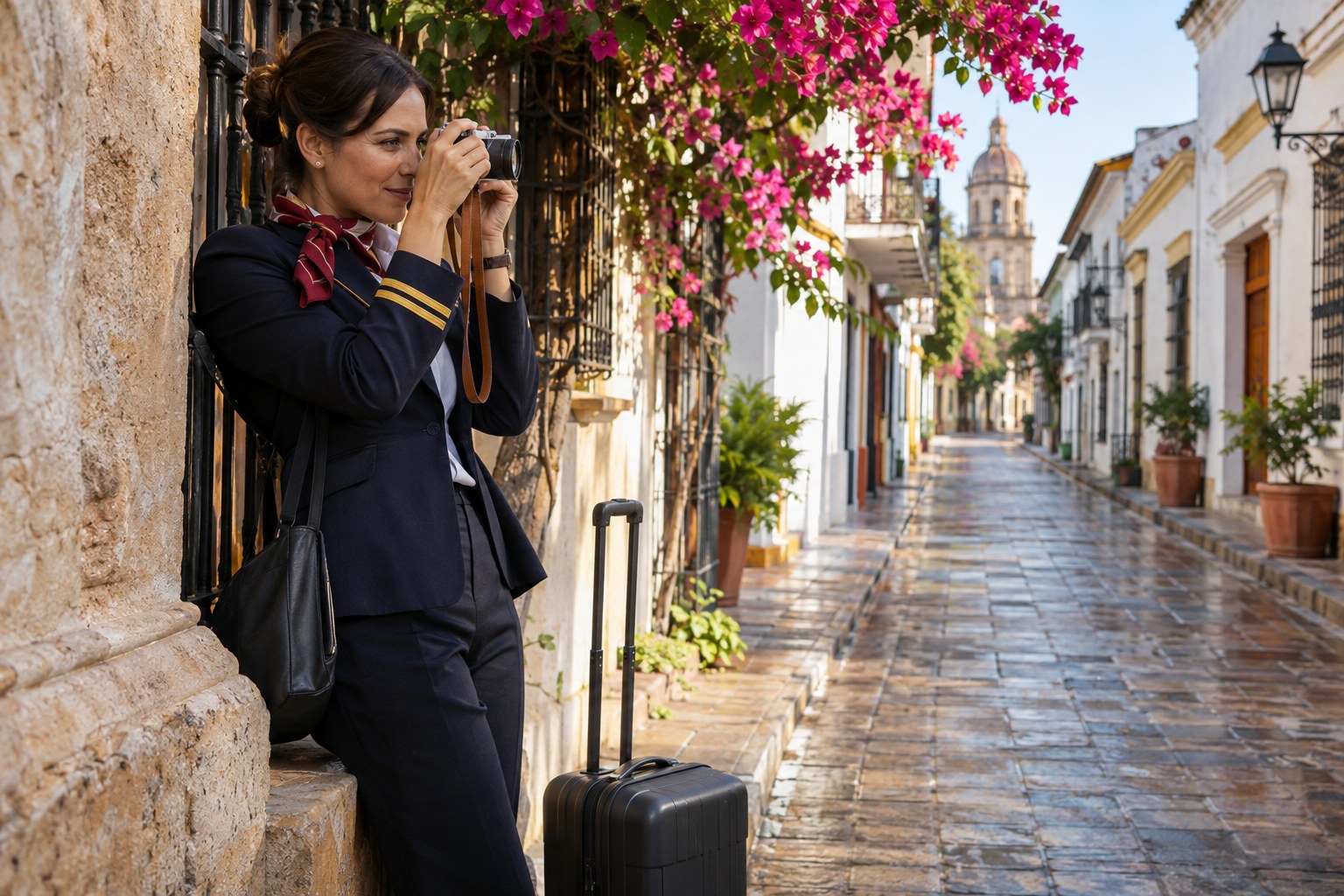
Give the walk one visual question
Try looking for doorways, morning shadows, tiled details, or a single color. A theme removes the pressure to photograph everything and gives a familiar neighborhood a fresh angle. Start somewhere that fits comfortably within your available time and return arrangements.
Use the camera or phone you already carry. Before leaving, check the weather and the route back. Your duty, rest, and reporting requirements set the boundary for the outing; a photograph is never a reason to rush that return.
Make the picture without taking over the place
Pause where you are out of the way, keep your belongings secure, and look around before stepping back for a wider frame. Respect venue rules and restrictions on photography. A beautiful entrance is still someone’s doorway.
For identifiable portraits, ask first and accept a no easily. Avoid photographing private crew information, work documents, badges, or hotel details that reveal colleagues’ movements. You can tell a rich travel story through light, architecture, food, and objects without making a stranger the subject.
Save a little context while it is still fresh
Choose three images rather than posting every frame. Add the general neighborhood, the date, and one detail you want to remember: a bakery opening its shutters or the sound of rain under an awning. Those notes help the pictures remain meaningful later.
If you share a recommendation, distinguish what you experienced from what another visitor should check. Opening hours, access, and prices can change. Keep originals in your usual photo backup arrangement instead of relying on a social post as the only copy.
Continue with our guide to exploring one neighborhood.
Your small, useful checklist
One doorway, one reflection, one ordinary scene can be enough. A small photography ritual gives a solo layover something to remember without asking the whole afternoon to become an itinerary. Travel plans also benefit from local context; consult Wikivoyage’s guide to respectful travel.