Separate work requirements from personal preferences
Start with the documents, uniform items, and equipment required by your employer. Keep that list distinct from your personal comfort items so an optional extra never pushes out something essential. Check current airline and airport restrictions before packing liquids, batteries, or food.
Next, look at the forecast and the realistic shape of your trip. A short hotel walk calls for a different outfit from an ambitious evening out. Build around one comfortable off-duty combination with layers that work together rather than a separate look for every possibility.
Give the things you use first the easiest access
A tidy bag is only useful if it stays useful when you are tired. Put the items you regularly need on arrival in one accessible pouch: charging cable, appropriate adapter, and the small personal essentials that help you settle in. Avoid burying them beneath everything else.
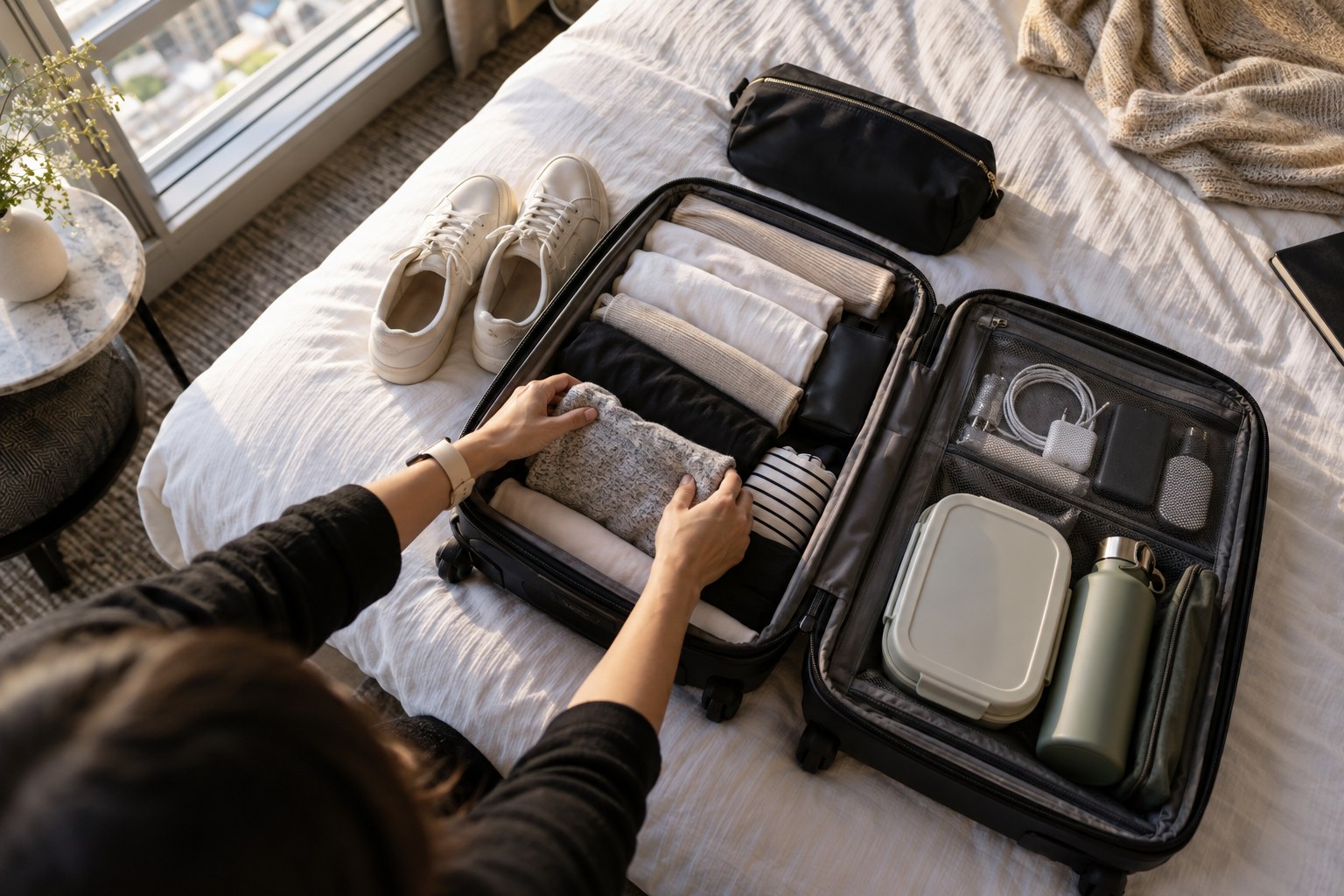
Use separate spaces for clean clothes, worn clothes, and anything that might leak. Packing cubes can help, but an elaborate system is not required. The test is whether you can find an item without unpacking the whole bag.
Choose essentials with more than one purpose
A layer that works on the journey and during a casual dinner earns its space twice. Comfortable shoes that suit the actual walking you plan to do are more useful than a pair brought only for an imagined occasion. A refillable bottle can be practical where refill facilities and local water guidance allow.
Be honest about duplicates. A spare charging cable may solve a recurring problem; three nearly identical toiletries probably do not. Keep the item that makes a predictable part of your trip easier.
Reset the bag before the next trip starts
When you get home, remove laundry, empty food containers, replenish used essentials, and check that documents and required equipment are where you expect them. A short reset prevents a small omission from becoming a departure-day scramble.
After a few trips, review the things that never leave the bag. Keep genuine contingency items, but question habits disguised as essentials. Your best crew packing system should improve with experience instead of growing heavier each month.
Your small, useful checklist
The strongest packing list is personal, practical, and easy to repeat. Start with what your trip requires, keep the pieces that solve real problems, and make room for the journey instead of every possible scenario. Continue reading Layover planning for flight attendants: a simple crew checklist. Travel plans also benefit from local context; consult Wikivoyage’s guide to respectful travel.