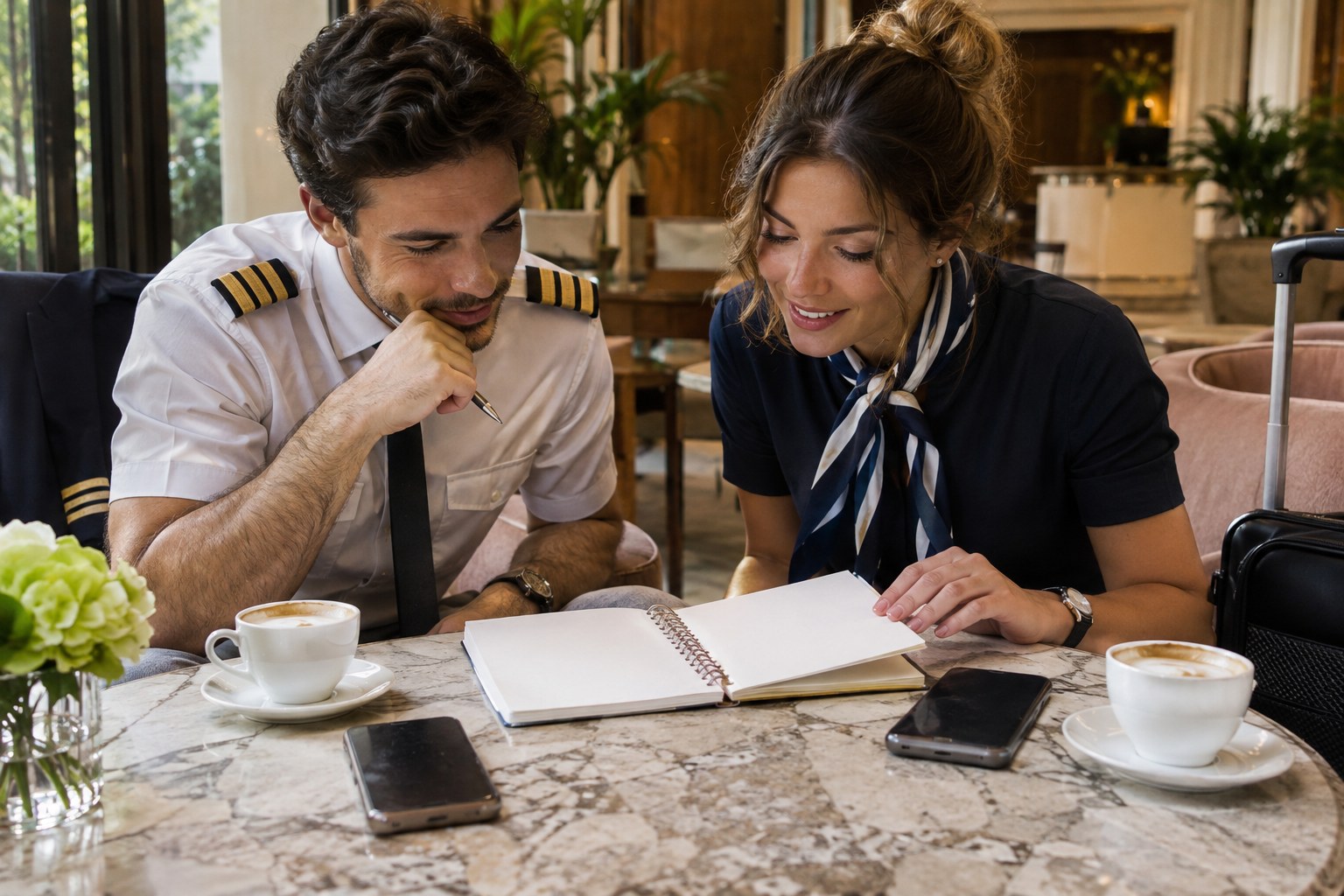
Give each message a clear purpose
Start with the point: “Coffee plan,” “Restaurant recommendation,” or “Photo from today.” For an invitation, include the time, public meeting point, and whether people need to reply. Say which local time you mean if members are in different places.
Avoid sending several fragments when one complete message will do. A reader should not need to scroll through the whole conversation to discover where you are meeting. If you are sharing a recommendation, add the venue name and a public link rather than only a photograph.
Keep social coordination separate from required information
Use your employer’s approved systems and responsible crew channels for duty, safety, reporting, and operational instructions. An informal social chat is not a reliable substitute. Do not forward sensitive work information to make a casual plan easier.
If a message seems to concern official arrangements, direct people to the appropriate source rather than presenting a rumor as an update. The useful contribution can be explaining where to confirm something, without reproducing private documents or unnecessary details.
Summarize changes and respect the people in the conversation
When the dinner location changes, post a clearly labeled final update with all essential details together. Ask before adding new members or forwarding identifiable pictures beyond the original circle. Not everyone wants their off-duty time public.
Make participation optional. People may read later, mute a busy conversation, or choose a quiet evening. A helpful group remains a place to find an invitation, not a place to account for every hour away from the phone.
Continue with our guide to sharing practical recommendations.
Your small, useful checklist
A good crew chat saves attention. Clear invitations and considerate boundaries leave more room for the conversations and shared discoveries that made the group useful in the first place. Travel plans also benefit from local context; consult Wikivoyage’s guide to respectful travel.