Describe the meal before asking for a commitment
Share a public menu or current venue page, the rough type of meal, and whether a booking is required. Make clear if someone is imagining several courses, a quick main, or just joining for company. Let people check the current prices themselves.
If a venue has deposits or cancellation conditions, explain them before anyone agrees. Do not make a reservation on someone’s behalf and reveal the commitment afterward. A casual invitation should leave an easy route to decline or suggest another option.
Offer a shared starting point rather than one compulsory evening
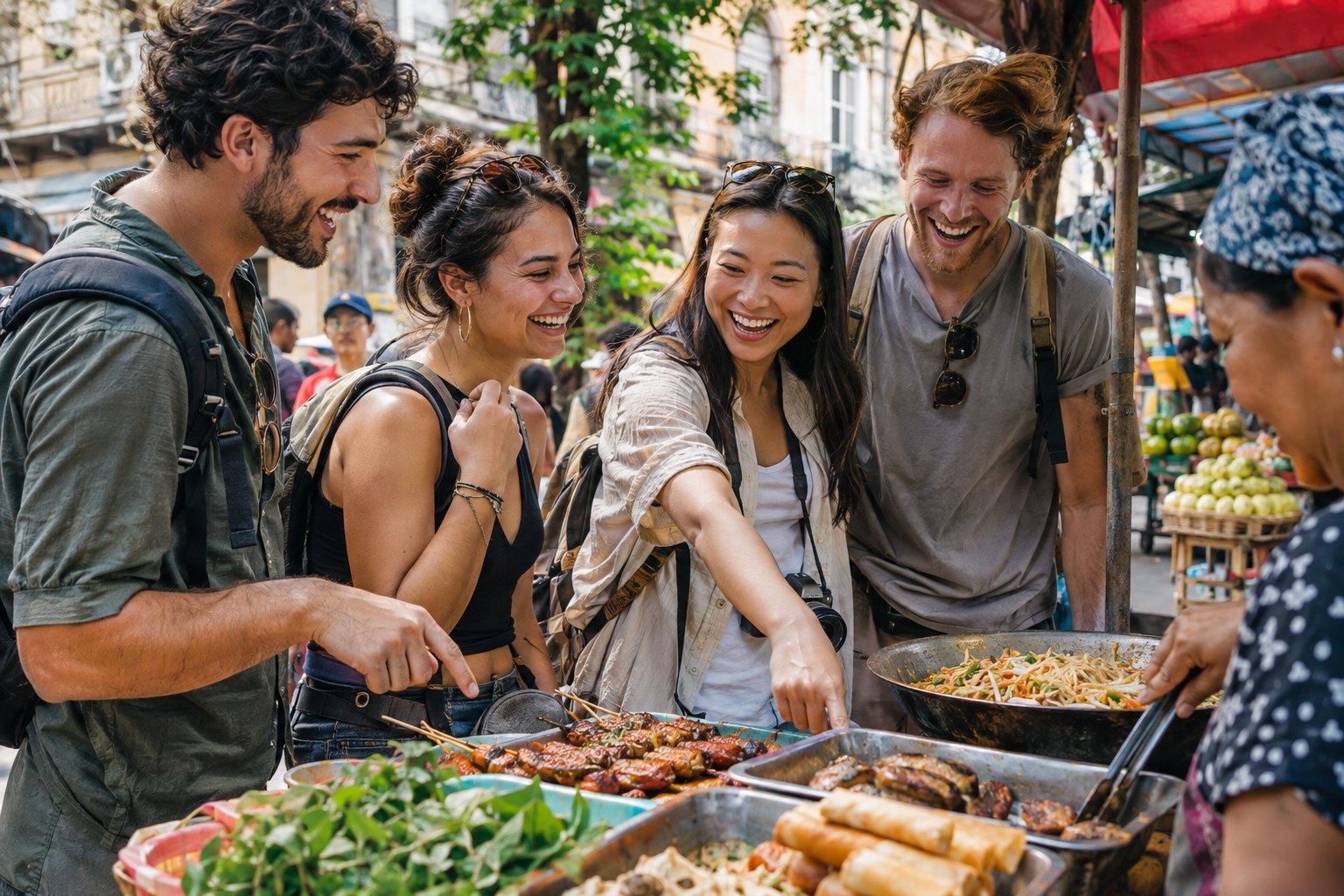
A market, a simple cafe, or meeting for a short walk before dinner can let people spend time together and then choose their own meal. “I will grab something here; anyone is welcome to join” can be easier than reaching unanimous agreement.
Check dietary and accessibility needs without guessing what a venue can accommodate. Ask the venue directly where a detail matters. Keep timing practical for the trip, including the route back and any rest or duty requirements.
Make the bill arrangement ordinary conversation
Before ordering, ask how the venue can handle payment and agree on the group’s preferred approach. Separate orders or separate checks may be possible, but should not be assumed. If you plan to share dishes, confirm what everyone actually wants to share.
Avoid assuming equal orders or equal comfort with a large shared bill. Keep the discussion factual and friendly. When the meal is over, thank the person who organized it and let the evening end without turning a different spending preference into a personal issue.
Continue with our guide to sharing useful layover recommendations.
Your small, useful checklist
The meal is there to support the conversation. When the practical expectations are clear, colleagues can choose comfortably and enjoy whatever version of the evening works for them. Travel plans also benefit from local context; consult Wikivoyage’s guide to respectful travel.